
At first glance, The Bride might look like another entry in the long parade of adaptations and reworkings tied to Mary Shelley’s Frankenstein. But the upcoming film from The Bride – written and directed by Maggie Gyllenhaal and starring Jessie Buckley alongside Christian Bale – is doing something markedly different. This isn’t merely an iconic monster tale retold. Instead, it feels like a cultural excavation, an attempt to place a rarely interrogated character at the very center of her own myth.
At its heart, The Bride asks a deceptively simple but profound question: who is she, really? It’s a question that ripples through the film’s symbolism and themes, and one that helps explain why this project feels like more than the next horror movie on the release calendar.
Reanimating a Character Who Never Got to Speak
The idea of The Bride originates from a character who historically did very little speaking and even less acting. In the 1935 film The Bride of Frankenstein, she famously awakens, takes just a few steps, recoils in horror, and never utters a word – yet her image would go on to define monster cinema for decades.
In the new film, that silence is flipped on its head. Jessie Buckley’s Bride is not a figure of passive design; she’s a person with agency, emotion, and a story worth telling in her own right. Director Maggie Gyllenhaal has said that she wanted to explore the narrative that was always implied but never actualized in the source material – what happens when a being created for someone else’s needs suddenly finds herself? “…Why stop here? Why does she not have agency?,” her creative thinking echoes in interviews around the film.
This shift is significant. It reframes the tale away from the familiar trope of man playing God toward something more introspective: a creature no longer defined by the purpose of her design, but by her struggle to understand who she is and what that life means.
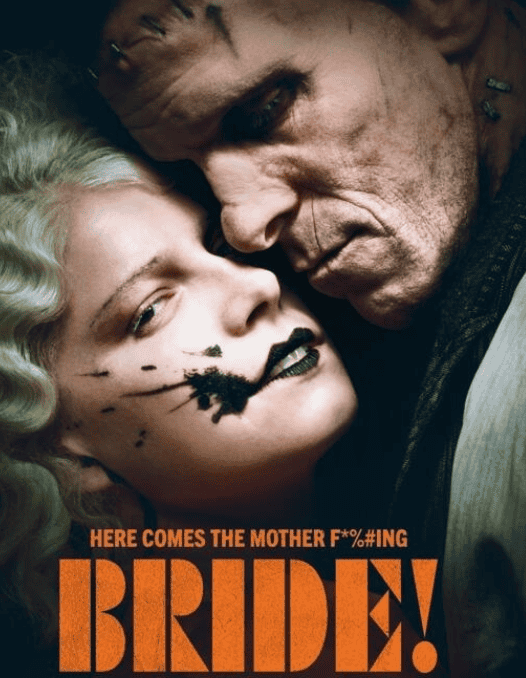
The Bride’s Symbolism: Beyond the Laboratory Walls
What makes The Bride especially intriguing is how it turns the metaphor of creation onto its head. Instead of focusing primarily on Dr. Frankenstein’s hubris, the film appears to place equal weight on the experience of the created, treating her existential awakening as a subject in her own right.
In traditional horror, monsters often symbolize societal anxieties. But when we talk about a character like the Bride, those anxieties become personal instead of abstract: she symbolizes autonomy, rebellion against imposed identity, and the disruptive potential of reclaiming one’s narrative. The very notion of a “bride” conveys ideas of union and completion, yet the film seems to push back against that idea by portraying her birth not as fulfillment but as the beginning of her own chaotic journey.
Instead of being a solution to someone else’s loneliness, she becomes a force unto herself – and that’s where the symbolism widens to cultural terrain rather than just gothic imagery.
Is The Bride Really a Monster Movie?
This is a question viewers and critics are already asking, and it’s central to how we might understand the film’s place in modern horror. Because if the Bride’s story is grounded in questions of identity, autonomy, and rebellion, then its horror elements may be far more psychological and thematic than literal.
Recent films in the broader horror landscape have redefined what “monster” can mean. For example, The Babadook uses supernatural terror as a metaphor for unresolved grief, and that emotional core becomes the real source of fear. Films like Titane delve into identity and bodily transformation in ways that feel visceral but also deeply symbolic. Even movies with more overtly feminist horror currents, like Saint Maud, pivot around interior experiences as much as exterior ones, allowing emotional and psychological landscapes to function as the “monster.”
So when we ask whether The Bride is “really a monster movie,” the answer might be: it uses monster motifs, but it’s also about something more elusive — the tension between imposed identity and self-determination.
Why This Matters: The Rise of Female-Centric Horror
One of the most exciting shifts in genre cinema over the past decade has been the rise of female-centered horror films that treat women not just as victims, but as psychological agents, emotional centers, and thematic anchors. Movies like Jennifer’s Body — once dismissed or misunderstood upon release — are now widely recognized for subverting expected gender dynamics and exploring female aggression with sharp irony.
Similarly, films like A Girl Walks Home Alone at Night, Raw, and others have expanded horror’s vocabulary, showing that female-led narratives can push the genre into new territory while also resonating with deeper cultural anxieties.
In this context, The Bride isn’t simply another monster movie. It’s part of a broader movement where horror becomes a canvas for wresting control of narratives historically mediated through patriarchal lenses, and then reshaping them from the inside out.
Final Thought: What The Bride Represents Now
The Bride arrives at a moment when traditional stories are being retold not to replicate the originals but to interrogate them. Its symbolism feels less about the stormy laboratory and more about what it feels like to wake up with a purpose no one scripted for you.
Because the most unsettling horror of all may not be shadows or stitched flesh — it could be the collision between who you were made to be and who you choose to become.