
Lifetime thrillers have always understood one thing: the real danger isn’t always the stranger outside the house. Sometimes it’s the person who looks exactly like you. With Double Double Trouble, premiering February 21, 2026, Lifetime leans into one of the most psychologically loaded storytelling devices in film history — identical twins — and layers it with something even more emotionally volatile: grief.
On the surface, the premise is classic thriller territory. Drea (played by Tami Roman) is reeling from a miscarriage and a broken marriage. Her identical twin sister Ali finds love with Ryan (Colin Lawrence), a man who seems to embody everything Drea feels she has lost. But this isn’t just sibling rivalry. It’s identity unraveling.
Why Twin Thrillers Fascinate Us — And Why This One Feels Different
Twin narratives have long fascinated audiences because they challenge something fundamental: individuality. From Dead Ringers to Orphan Black, stories about doubles ask an unsettling question: If someone shares your face, what makes you you?
In Double Double Trouble, that question becomes deeply personal. Drea isn’t just watching her sister find happiness. She’s watching a version of herself — physically identical — succeed where she feels she failed. That’s not envy. That’s existential – the fear of being replaced.
The Miscarriage Isn’t Just Backstory
The movie mentions Drea’s devastating miscarriage almost in passing. But emotionally, that detail changes everything. Loss of a pregnancy is not just physical grief. It can fracture identity. It can create feelings of inadequacy, of lost purpose, of displacement. When you layer that onto a story about identical twins — about someone who shares your face but not your misfortune — the psychological stakes intensify.
Drea isn’t just grieving a child. She’s grieving the version of herself she imagined becoming. And now her sister is living a life that feels like it could have been hers.
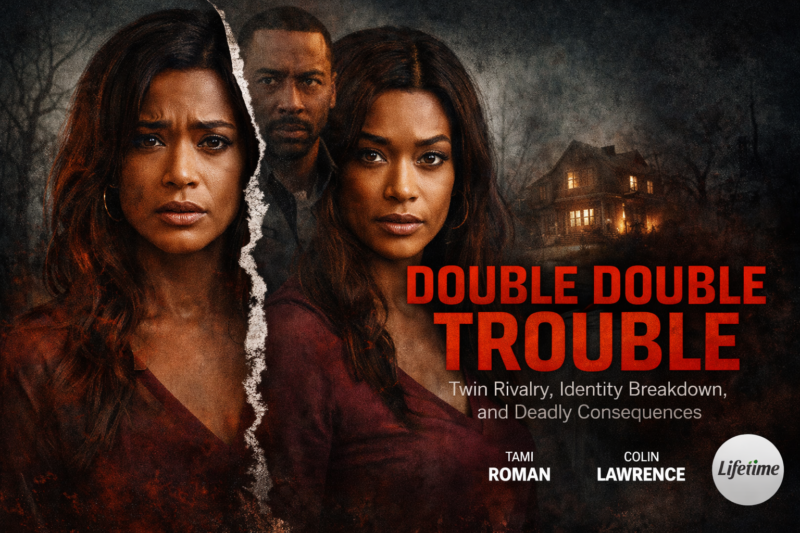
Tami Roman Playing Twins
There’s also a performance layer here that deserves attention. Roman takes on dual roles — Drea and Ali — which means she must embody two distinct emotional realities while maintaining physical sameness. In twin narratives, the tension often comes from subtle differences: posture, voice, stillness, volatility. The audience has to believe they are watching two people, not one actor with clever editing. That kind of doubling mirrors the film’s thematic core. The characters look identical. Their inner lives are not. And that contrast is where the suspense builds.
Identity, Loyalty, and the Danger of Resentment
Family-based thrillers hit differently because betrayal isn’t external, it’s personal. The closer the relationship, the sharper the fracture. Twin stories amplify that dynamic. There’s shared history. Shared childhood. Shared DNA. When resentment enters that space, it feels like an internal war made visible.
In Double Double Trouble, the question isn’t simply “Who is the villain?” It’s “What happens when grief warps the mirror?”
At its core, Double Double Trouble seems less about murder and more about identity collapse. What if the life you wanted is lived by someone who shares your face? What if the only thing separating you from happiness is circumstance? And what happens when grief makes that separation unbearable?
What Is Double Double Trouble About?
Double Double Trouble is a 2026 Lifetime psychological thriller starring Tami Roman as identical twins Drea and Ali. After a miscarriage and divorce, Drea spirals when her twin finds love with a man she believes represents everything she’s lost. The film explores twin rivalry, grief, and identity breakdown.
🎬 What to Watch After Double Double Trouble
If this twin-driven psychological spiral pulls you in, here are a few films and series that explore similar themes:
- Dead Ringers – David Cronenberg’s chilling twin identity classic.
- Orphan Black – A masterclass in one actor portraying multiple identical characters.
- The Other – A haunting look at twin psychology and blurred reality.
- The Pretty One – A lighter but still identity-driven twin swap story.
- Single White Female – Not about twins, but about identity obsession and replacement.