
One of the reasons Death Valley worked so well in its first series was that the murders almost felt secondary at times. The real appeal was watching John Chapel and Janie Mallowan irritate each other for an hour while slowly proving they actually need each other. Series 2 looks like it understands that completely.
The new season, returning to BBC One and iPlayer on May 17, immediately throws their partnership into a much messier place. Janie has now been promoted to Detective Inspector, which should technically make her more confident and in control. Instead, it sounds like she is overwhelmed, buried in paperwork, and increasingly frustrated with John after discovering he has been secretly dating her mother. This gives the new season more emotional tension than most cozy crime dramas bother with.
Timothy Spall sees John and Janie’s relationship as something closer to siblings than a mentor-and-student pairing. That probably explains why their arguments work so well. Neither of them treats the other with much reverence. Janie openly calls out John’s ego and self-dramatisation. John pushes her patience constantly. But there is also an obvious level of trust underneath all the friction.
It seems the show is leaning more into personal storylines in Death Valley Series 2 instead of simply resetting the relationship every episode. Janie meeting her estranged father could become one of the season’s biggest emotional arcs. According to Gwyneth Keywort, Janie’s father is a wandering “rolling stone” type figure who clashes with almost everything she believes about responsibility and family.
That makes sense because Janie has always hidden a lot of herself behind sarcasm and quick reactions. The first series hinted at vulnerability, but mostly kept things light. Series 2 sounds more interested in showing where that defensiveness actually comes from.
At the same time, John appears to be confronting his own past more directly. One of the episodes in Death Valley Series 2 takes place on the set of a large fantasy television series, forcing John back into the acting world he left behind years ago. That setup feels perfect for the character because so much of John’s personality depends on performance anyway. He treats conversations like scenes and constantly frames himself as the smartest person in the room, even when he clearly is not. The question is whether the show lets him become more honest with himself this season.
But Death Valley still sounds committed to being fun first. New cases this season are exactly the kind of settings the show handles well: fishing villages, rugby clubs, communes, community service groups, and even a locked-room mystery inside a police station. The series clearly enjoys throwing its characters into slightly ridiculous situations while keeping the emotional reactions grounded enough to feel believable.
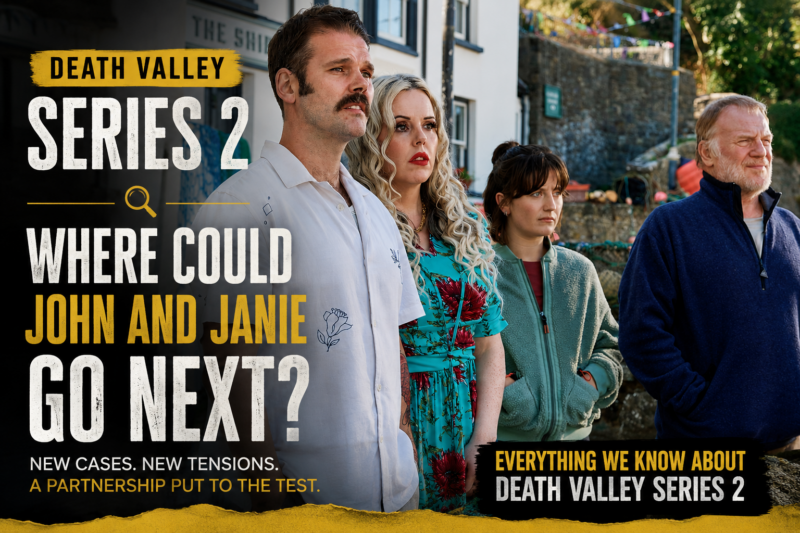
Death Valley Series 2 understands that viewers sometimes just want clever mysteries, eccentric suspects, good character chemistry, and a setting they actually enjoy spending time in. The Wales setting continues to help with that too.
The language, humour, coastal towns, rugby culture, and local communities all feel baked into the identity of the show. Gwyneth Keyworth believes that this authenticity gives the series its own rhythm rather than making it feel like another interchangeable British detective drama.
The crimes matter. But in the end, the atmosphere matters more. People are returning because they want to spend time with John and Janie again. The murders simply give them an excuse to do that.