
When Netflix released the Voicemails for Isabelle trailer, the obvious talking point was the romantic setup. A grieving woman keeps leaving messages for her late sister, unaware that the phone number has been reassigned to a stranger. That stranger, played by Nick Robinson, starts listening. Romance eventually enters the picture.
But the trailer keeps returning to something else. The real relationship at the center of Voicemails for Isabelle appears to be the one that no longer exists.
Zoey Deutch plays Jill, a San Francisco woman trying to navigate dating disasters, workplace chaos, and everyday life after the death of her sister Isabelle. Instead of moving on, she continues talking to her through voicemails. The messages begin as funny, messy updates about bad dates and awkward encounters. Then they gradually reveal the actual reason she’s calling.
She isn’t trying to communicate with the dead. She’s trying to hold on to someone she can’t let go of. The depth of the emotional bond one shares with a sibling then becomes central to the movie.
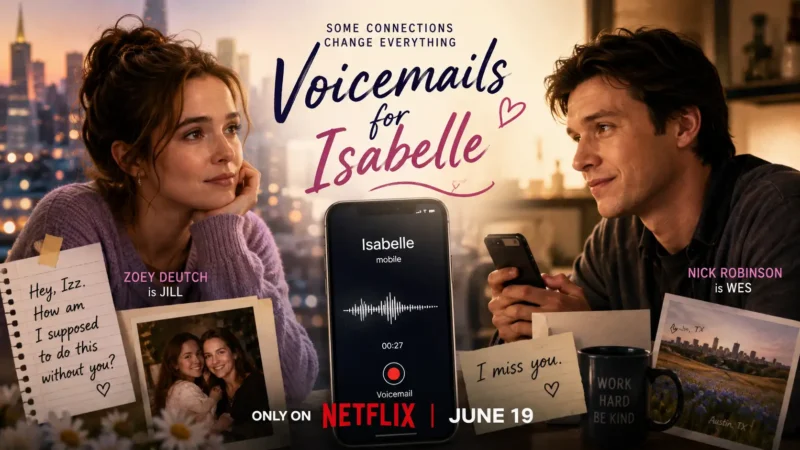
The trailer spends plenty of time showcasing Jill’s chaotic personality. She jokes about dating apps, complains about her boss, and delivers the kind of rapid-fire observations that Zoey Deutch has become known for since Set It Up. The comedy looks sharp, and Netflix clearly wants audiences to see the film as a crowd-pleasing rom-com.
However, the emotional turning point arrives when Jill asks a simple question:
“How am I supposed to do this without you?”
Everything before and after that moment feels diametrically opposite. The voicemail gimmick suddenly stops feeling like a romantic setup and starts feeling like a grief ritual.
Many grief stories focus on dramatic breakdowns or life-altering revelations. Voicemails for Isabelle looks more interested in the quieter reality of loss. The small habits that linger and the conversations they continue having long after someone is gone. The inability to accept that certain routines no longer make sense. That grim reality could make the movie resonate with viewers who have experienced similar loss.
The romance with Nick Robinson’s character, Austin real estate agent Wes, appears to grow from that emotional foundation rather than replace it. In fact, one of the more interesting details in the trailer is Wes refusing to immediately tell Jill that Isabelle’s number has been reassigned.
His friends think he should tell her. The audience probably thinks he should tell her, or else he is just making her suffer. That she will one day wake up from this and will go though the pain of loss again. But he hesitates because he recognizes what the voicemails are actually doing for her.
They are helping her survive and are her way of coping with the loss. While most romantic comedies build attraction through meet-cutes, misunderstandings, or workplace conflicts, Voicemails for Isabelle builds its connection through vulnerability. Wes learns who Jill is before he ever properly becomes part of her life.
The film even acknowledges the comparison audiences will inevitably make. One character calls the situation a “sick reboot of You’ve Got Mail.” The reference is funny because it is accurate. Both stories revolve around unexpected emotional connections between strangers. But there is one major difference.
You’ve Got Mail was ultimately about two lonely people finding each other Voicemails for Isabelle appears to be about someone learning how to live after losing the person she loved most. The romance is simply what happens along the way.
That is also why the movie feels closer in spirit to films like Someone Great than traditional Netflix rom-coms. Like that film, the central emotional journey seems tied to loss and personal healing rather than the final romantic outcome. The love story matters, but it may not be the entire point.
Leah McKendrick, who writes and directs the film, seems to understand that balance. The movie may never become overwhelmingly sad, nor will it ignore the weight of Isabelle’s death. Instead, it tries to move between absurd comedy and genuine heartbreak that feels surprisingly natural. And that combination may be the reason Voicemails for Isabelle stands out in a crowded streaming landscape.
Romantic comedies are everywhere. Stories about grief are everywhere too. A film that treats both with equal importance is much harder to find.
When Voicemails for Isabelle arrives on Netflix on June 19, viewers expecting a straightforward romance may get something a little different. The chemistry between Zoey Deutch and Nick Robinson will likely be part of the appeal. But the movie’s lasting impact may come from the relationship that exists only in memories, old habits, and a voicemail inbox that was never supposed to answer back.
What to Watch After Voicemails for Isabelle
Someone Great (2019)
After a devastating breakup, a woman spends one final weekend in New York with her closest friends before starting a new chapter.
Love, Rosie (2014)
Two lifelong friends repeatedly miss their chance at romance while life keeps pulling them in different directions.
P.S. I Love You (2007)
A grieving widow discovers messages left behind by her late husband that help her rebuild her life.
Sleepless in Seattle (1993)
A widower’s story unexpectedly captures the attention of a woman on the other side of the country.
One Day (2024 Series)
Two friends reconnect on the same date every year as their lives slowly intertwine over decades.
Nobody Wants This (2024 Series)
A modern romantic comedy series about two people trying to make an unlikely relationship work despite their differences.
Love Life (2020-2021 Series)
An anthology exploring how relationships shape personal growth through different stages of life.