
The Mother Mary film does not land comfortably in any familiar category. It is being described as a music-driven project, but that label seems limited once you look at who is involved and how little the story is being explained.
The Plot
Directed by David Lowery, whose work usually leans quiet and reflective, the film already feels like an unusual fit within the idea of a “music movie.” It stars Anne Hathaway as a pop icon and Michaela Coel as a fashion designer, which is not the kind of pairing you expect in a straightforward rise-and-fall story. And that is where the tone starts to change in this psychological drama movie.
Most music films follow a pattern. They focus on fame, success, and then the cost of it. But here, the setup feels less interested in the journey of a pop star and more focused on what surrounds her. The relationship between Hathaway’s character and Coel’s looks central, and it points at something more internal than external.
That is also reflected in the way the film is being talked about. There is no clear outline of a traditional plot. Instead, it is revealed in fragments. A musician. A relationship. A kind of emotional or psychological tension. That ambiguity suggests the film may not be structured like a typical narrative at all.
The A24 connection adds another layer to this. The studio has built its identity around projects that do not follow expected formats, and the A24’s Mother Mary approach seems consistent with that. But even within A24’s catalogue, this feels slightly offbeat. It is not positioned as experimental in a loud way. It is quieter, but also harder to define.
The problem with trying to define the Mother Mary plot is that it keeps resisting clarity. But that may be intentional. Instead of telling a story about music, the film seems to be using music as a backdrop for something less obvious. Possibly identity. Possibly control. Or something even harder to label.
That is where it starts to stand apart from most music films A24 has been associated with, or even the genre in general. It is not aiming to celebrate music or critique fame in a direct way. It feels more like it is observing the space around both.
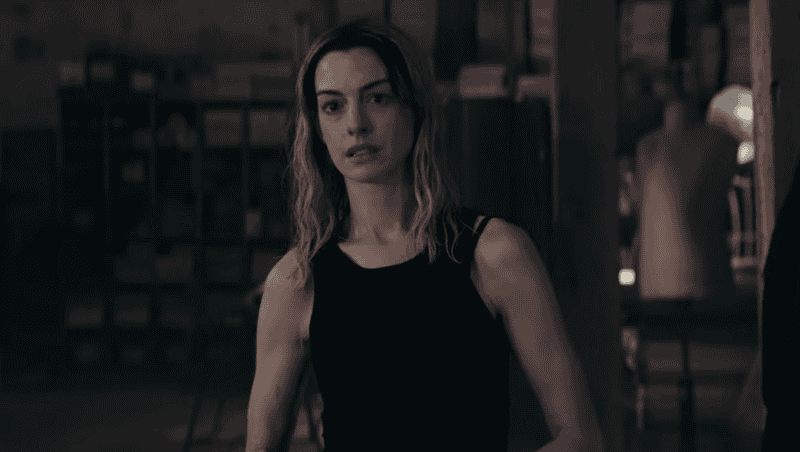
The Music and Cast
The songs are reportedly created by Jack Antonoff and Charli XCX, which points toward a strong pop influence. But given Lowery’s involvement, it is unlikely that the music will be used in a conventional performance-heavy structure. It may function more as an extension of character rather than spectacle.
Anne Hathaway’s role is also worth noting. Anne Hathaway casting choice does not lean on her past musical roles like Les Misérables. This is a different kind of performance, one that may be more restrained or even distant and aligns with the overall tone the film appears to be building.
The film is expected to release in 2026, though an exact date has not been confirmed yet. And even with limited information, it already stands out for what it is not doing. It is not trying to explain itself too early.
That might end up being the most defining thing about it.