
Fuze (2026) feels like a natural extension of what David Mackenzie has been doing for a while, just on a much larger scale. The core idea is simple enough. A World War II bomb is discovered at a construction site in London, forcing a citywide evacuation. But that is only the surface. Beneath it, a heist is quietly set into motion. And that is what shapes the crux of this action thriller.
Mackenzie has worked in crime stories before, most notably with Hell or High Water. That film stayed grounded, almost restrained. Fuze moves in the opposite direction visually. It is bigger, louder, and more crowded. But the underlying approach to tension has not changed as much as it seems. The focus is still on people making calculated decisions under pressure, in this London heist film.
The Cast
Aaron Taylor-Johnson and Theo James carry much of that tension. Their performances appear controlled, sometimes deliberately flat, which works within the film’s structure. These are not characters meant to be overly expressive. They operate with intent. Gugu Mbatha-Raw and Sam Worthington bring a different energy on the authority side, where urgency is more visible but still contained.
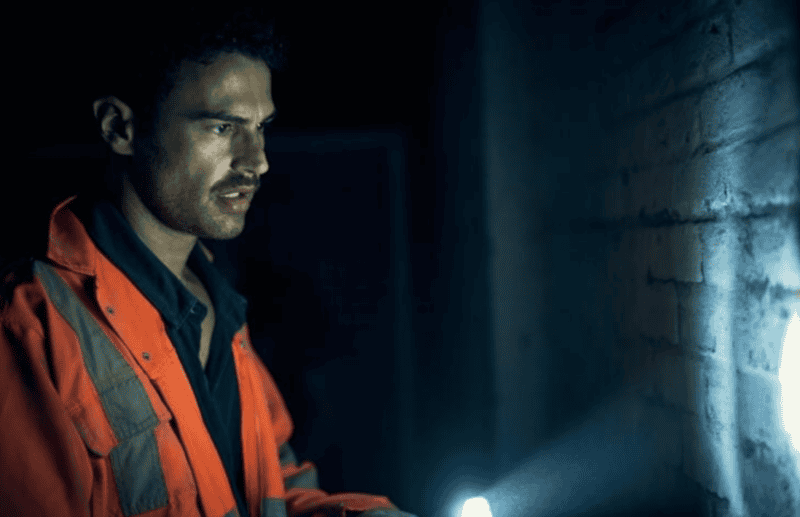
Fuze Plot Elements
Set in contemporary London, the evacuation becomes more than just a plot device. It creates space. Streets empty out. Systems start to strain. And that gap allows the central operation to unfold. Mackenzie uses that environment carefully. He does not rush through it. He lets the logistics breathe, which adds weight to the unfolding plan.
The larger canvas means more moving parts, and not all of them feel equally developed. Some subplots come in with purpose and then fade out too quickly. Others seem to exist mainly to support the scale rather than the story. This is where Fuze feels different from Mackenzie’s earlier work. The intimacy is harder to maintain.
The heist itself is structured around precision rather than spectacle. There are twists, but they are not overly dramatic. They come from shifts in information and timing. That keeps the film grounded, even when the situation itself is extreme.
At times, the film seems to lean too much on its setup. The idea of using a citywide evacuation as cover is strong. But once that idea is established, the execution has to keep building. The crime thriller does this in parts, but not always with the same clarity. There are moments where it feels like the film is moving forward because it has to, not because the story is tightening.
He avoids over-stylizing the material. There is no excessive visual flair. The pacing is measured, sometimes even slower than expected for a film built around a ticking-clock scenario. That choice will not work for everyone, but it does align with his style. He is more interested in process than spectacle.
Releasing on
Fuze, releasing April 24, 2026, sits somewhere between a character-driven crime story and a large-scale thriller. It does not fully commit to either side. That can feel uneven, but it also makes the film slightly harder to categorize.
It shows a director trying to expand without completely abandoning what worked before. The result is a film that is more ambitious than precise. It works in stretches, especially when it leans into controlled tension. But it also feels like it is still adjusting to its own scale.
Mackenzie returns to crime here, but the size changes the way that story unfolds.