
LMN thrillers usually work with familiar fears. Obsession, betrayal, hidden identities. But Death at the Dinner Party, releasing May 15, 2026, goes after something more specific. It is interested in influence. More importantly, it is interested in why certain young men become easy to influence in the first place.
The Plot
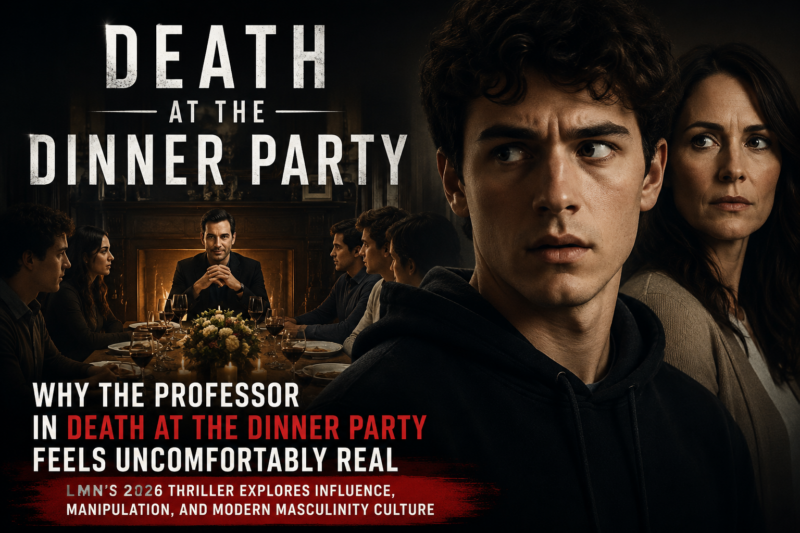
Cameron Brodeur plays Ethan, a college student whose personality changes dramatically after falling under the mentorship of psychology professor Alan Jackson. His mother Andrea, played by Candice Lidstone, arrives on campus expecting to see the same shy son she knows. Instead she finds someone more confident, more aggressive, and strangely rehearsed in the way he speaks. The film immediately frames that transformation as both impressive and unsettling.
The detail that works best is Ethan’s stutter disappearing. The movie could have treated that as a simple confidence boost. But it uses it almost like evidence of psychological dependency. Ethan is not becoming himself. He is becoming the version of himself that Professor Jackson approves of.
What is Death at the Dinner Party About?
The “Jordan Peterson-like” comparison in the film’s description is not subtle, and the movie clearly knows what kind of cultural conversation it wants to step into. Alan Jackson represents a very recognizable type of intellectual authority figure. Calm voice, structured worldview, targeted appeal toward insecure young men searching for identity. The character probably works because audiences already understand this personality before he even enters the room.
The Lifetime film seems less interested in proving Jackson is dangerous and more interested in explaining why students like Ethan want to believe him. Ethan is not manipulated necessarily because he is weak. He is manipulated because Jackson offers certainty. For young people trying to escape insecurity, certainty can look a lot like strength. This is where the movie has the potential to be more unsettling than a standard LMN mystery.
What to Expect
The dinner party death introduces the thriller mechanics, but the real tension comes from watching Ethan slowly lose trust in his own instincts. Once his friend dies and the stutter returns, the film appears to suggest that his earlier confidence was never stable to begin with. It was performance. And now the performance is collapsing.
There is also something interesting about setting this story at a wealthy New England college during the fall semester. That backdrop gives the movie a polished academic atmosphere that contrasts with the paranoia underneath. Trustworthy environments often create the illusion that dangerous people must look dangerous. Professor Jackson apparently does not. He looks educated, respected, articulate, and emotionally controlled. Those are exactly the traits that make characters like him persuasive.
The mother-son dynamic also gives the story more emotional weight than it would otherwise have. Andrea is not simply investigating a suspicious death. She is trying to understand why her son suddenly speaks like someone else. That is probably a more recognizable fear for many parents than the murder itself.
A weaker version of this premise could have turned Jackson into an exaggerated cult leader figure. But the more effective approach is restraint. Real influence usually looks respectable at first. It sounds reasonable. That is why it works.
The best psychological thrillers understand that manipulation rarely begins with fear. It begins with validation. That appears to be the lane Death at the Dinner Party wants to stay in. The mystery matters, but the deeper idea underneath it is about vulnerability disguised as empowerment. Ethan believes he is becoming stronger. Andrea sees that he is becoming dependent.
Whether the movie fully delivers depends on how far it is willing to push the psychological side of the story. But the premise alone already separates it from more interchangeable cable thrillers. Death at the Dinner Party is pulling from modern internet culture, male self-help rhetoric, campus identity politics, and parasocial mentorship dynamics without directly turning into a social commentary lecture.
Quick Summary
Title: Death at the Dinner Party
Release Date: May 15, 2026
Cast: Cameron Brodeur, Candice Lidstone
Plot: An insecure college student falls under the influence of a charismatic psychology professor after a suspicious death at one of the professor’s dinner parties forces his mother to investigate.